


In the fields of power and electronics, cores serve as the central components of devices such as transformers and inductors, and their performance has a crucial impact on the overall efficiency and service life of the equipment. Amorphous cores and conventional cores are two common types of cores, and they exhibit significant differences in terms of material properties, manufacturing processes, and application performance. The following is a detailed comparison of these two types of cores:
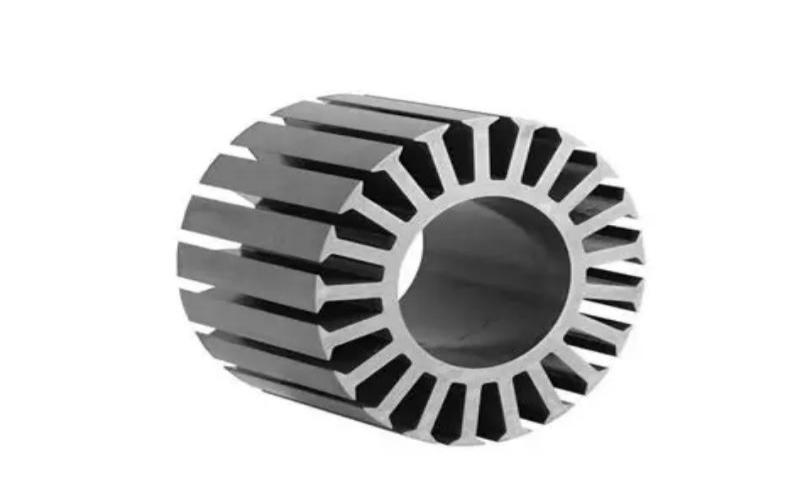
1. Material Characteristics
Common Iron Core
Material: Usually made by stacking silicon steel sheets (also called electrical steel). Silicon steel sheets contain a certain amount of silicon to reduce hysteresis loss and eddy current loss.
Crystal Structure: Has a regular crystal arrangement. This structure causes some hysteresis under the influence of a magnetic field, leading to energy loss.
Amorphous Iron Core
Material: Made of amorphous alloy, which is a metal alloy obtained through rapid cooling technology, with no long-range order in atomic arrangement.
Crystal Structure: Irregular arrangement, which makes the behavior of amorphous alloys in a magnetic field more uniform, reducing hysteresis loss.
2. Manufacturing Process
Ordinary Iron Core
The manufacturing process is relatively simple, mainly involving stamping, cutting, and stacking silicon steel sheets to form the desired shape and structure.
Annealing is required to eliminate processing stress and improve the magnetic properties of the material.
Amorphous Iron Core
The manufacturing process is more complex and requires the use of special rapid cooling techniques (such as the melt spinning method) to obtain amorphous alloy strips.
The strips need precise cutting and winding processes to form an iron core shape that meets the requirements.
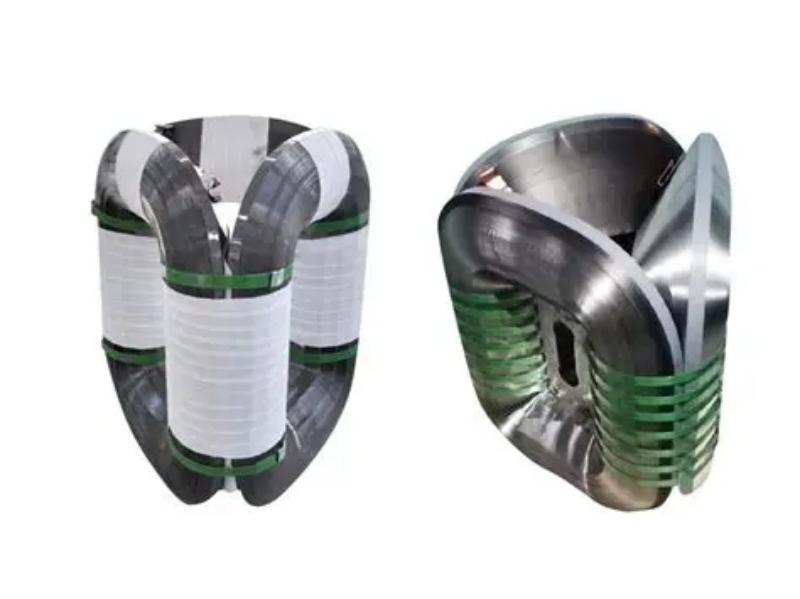
3. Performance and Applications
Ordinary Iron Core
It has relatively high saturation magnetic flux density and good mechanical strength, making it suitable for various electrical equipment and industrial applications. However, due to hysteresis and eddy current losses, its energy efficiency is relatively low, especially in high-frequency applications.
Amorphous Iron Core
It has extremely low hysteresis loss, resulting in high energy efficiency, making it especially suitable for applications requiring efficient energy conversion. It performs excellently under high-temperature and high-frequency conditions, significantly enhancing equipment operational efficiency and stability. Due to higher manufacturing costs, it is typically used in high-end electrical equipment or specialized applications.

4. Conclusion
In summary, there are significant differences between amorphous iron cores and conventional iron cores in terms of material properties, manufacturing processes, as well as performance and applications. The choice of which type of core to use depends on specific application requirements and cost considerations. For devices that pursue high efficiency and high performance, amorphous iron cores are a worthwhile option; whereas for cost-sensitive applications or situations where energy efficiency is not a priority, conventional iron cores, which are more economical and practical, can be chosen.
Parameters Changes in World Stainless Steel Markets
2020-10-12Electrical steel enables new propulsion systems to enable future aviation development
2024-04-03Research progress of non-oriented silicon steel forces for electric motors of new energy vehicles
2024-01-10In-depth Analysis of Technical Trends and Overseas Opportunities for Silicon Steel
2025-11-06Highlights of Stainless Steel Procurement in Kitchenware Industry in the 3rd quarter of 2022
2022-07-25The role of stainless steel screens in different decorative spaces
2021-06-29