


From January 3 to 6, the 29th South Australia Science Conference, titled “Scientific Foundations and Applications of Amorphous Semiconductors for Intelligent Sensing,” was held. Fifty-two academicians and experts, including nine such as Academician Ma Yuguang of the Chinese Academy of Sciences (CAS) and Director of the State Key Laboratory of Luminescent Materials and Devices at South China University of Technology, and Academician Liu Yichun of CAS and former President of Northeast Normal University, gathered to discuss cutting-edge scientific issues and major strategic demands in the field of amorphous semiconductors.
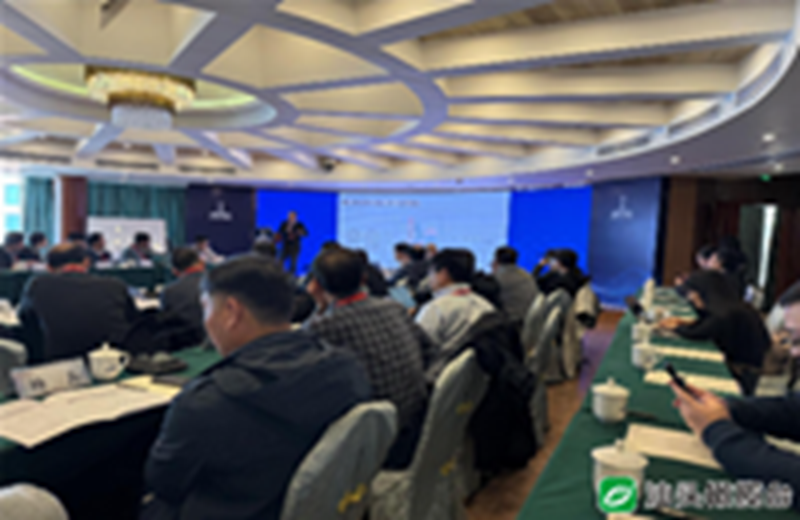
The conference focused on the frontier topic of “Scientific Foundations and Applications of Amorphous Semiconductors for Intelligent Sensing,” bringing together wisdom from all sides to jointly advance research and development in this field. Experts and scholars from different regions and disciplines shared and exchanged insights on the latest applications and development trends, while exploring innovative solutions, covering topics such as molecular aggregation states and structure-activity relationships, flexible electronics and sensing integration, disordered structures and intelligent design, and high-performance devices and integrated innovation.
“The advent of the intelligent era has placed high demands on storage and computing power,” said Liu Yichun, Academician of CAS, former President of Northeast Normal University, and Executive Chair of the conference. He noted that while amorphous semiconductors already show promising applications in optoelectronic devices, many unexplained phenomena and unresolved fundamental scientific issues remain in both theory and experiments when it comes to intelligent sensing. “We hope that the in-depth discussions at this conference will vigorously drive breakthroughs and development in this field.”
Academician Zhu Weihong of CAS, Standing Committee Member and Vice President of East China University of Science and Technology, who has long been focused on the research and industrial application of organic functional materials, was invited to the South Australia Science Conference for the second time. In this seminar, he not only focused on fundamental scientific issues but also aimed to explore the deep integration of academia and industry, striving to address practical industrial bottlenecks. “We hope to closely integrate organic functional materials with industrialization under the ‘dual carbon’ goals, such as the photonically driven color-changing glass technology that has already achieved industrial promotion,” he said. He particularly pointed out that the Shantou region, with its strong sunlight and high average annual temperatures, is an ideal location for implementing this technology, as it can effectively block ultraviolet rays while enabling sunlight absorption and energy conservation.
To date, the South Australia Science Conference has held 29 consecutive sessions and organized eight high-level academic events, inviting a total of 1,557 experts and scholars, including 158 academicians, to gather on Nan’ao Island. These gatherings facilitate in-depth discussions and exchanges on the latest technological advancements, frontier applications, and development trends, continuously enhancing fundamental research and original innovation capabilities.
Why and how do the stator and rotor "roll"?
2024-03-16Classification and Application Scenarios of Stainless Steel
2025-09-26Stainless steel smelting method
2021-01-28Stainless steel makes green buildings better
2022-11-25Processing silicon wafers of surface steel sheets
2022-11-02Stainless steel wire drawing process introduction
2023-10-11